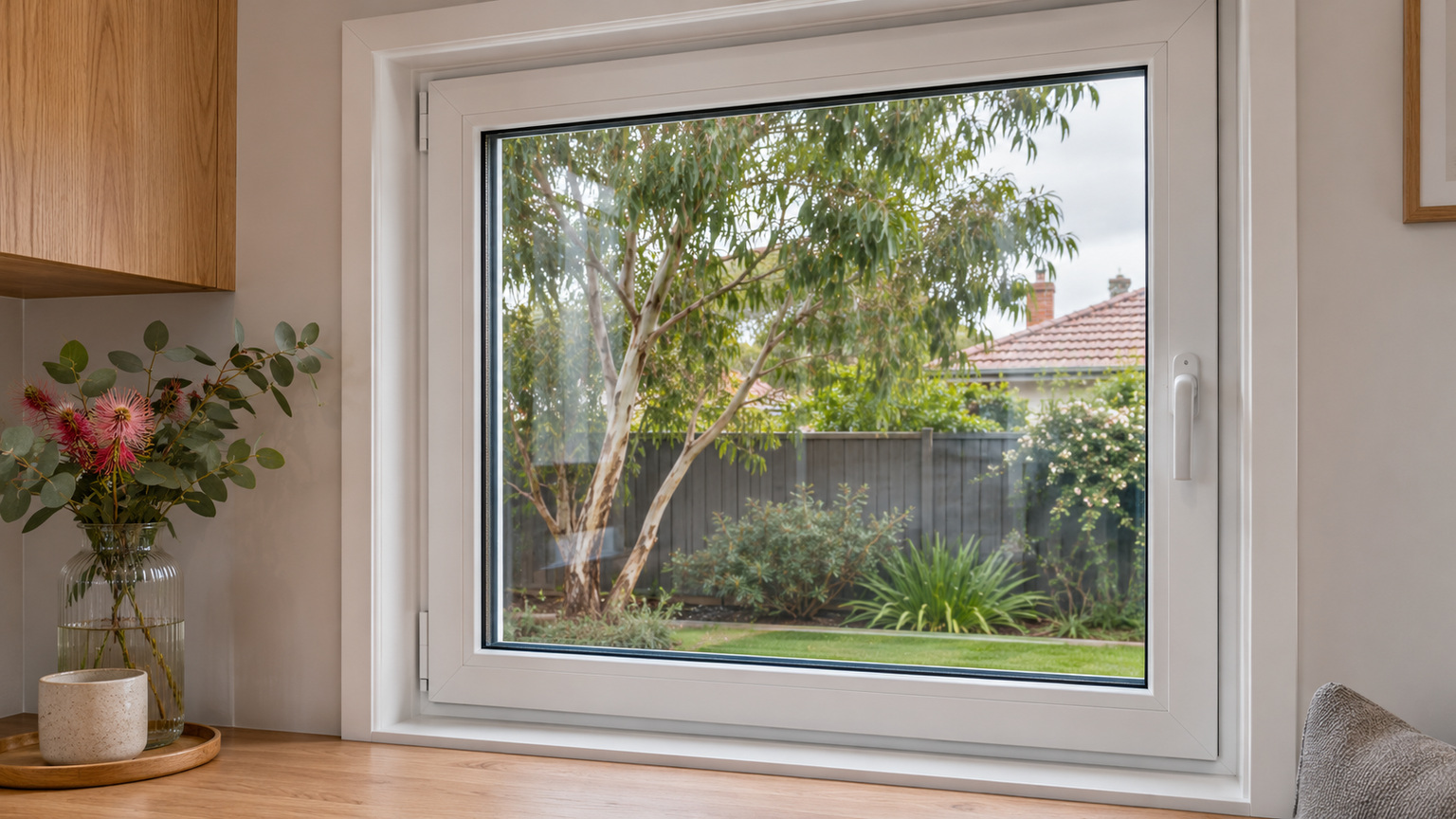
Double glazing is two panes of glass sealed into one unit, held a set distance apart by a strip around the edge. The gap between the panes holds dry air or argon gas. That sealed gap slows the heat escaping through the glass, so on a cold Melbourne night a double glazed window loses less heat than a single pane. On a quote, numbers such as 4-12-4 give the thickness of each pane and the width of the gap, in millimetres.
Two quotes for the same renovation might read 4-12-4 and 6-12-6 argon, with nothing on either page to explain the difference.
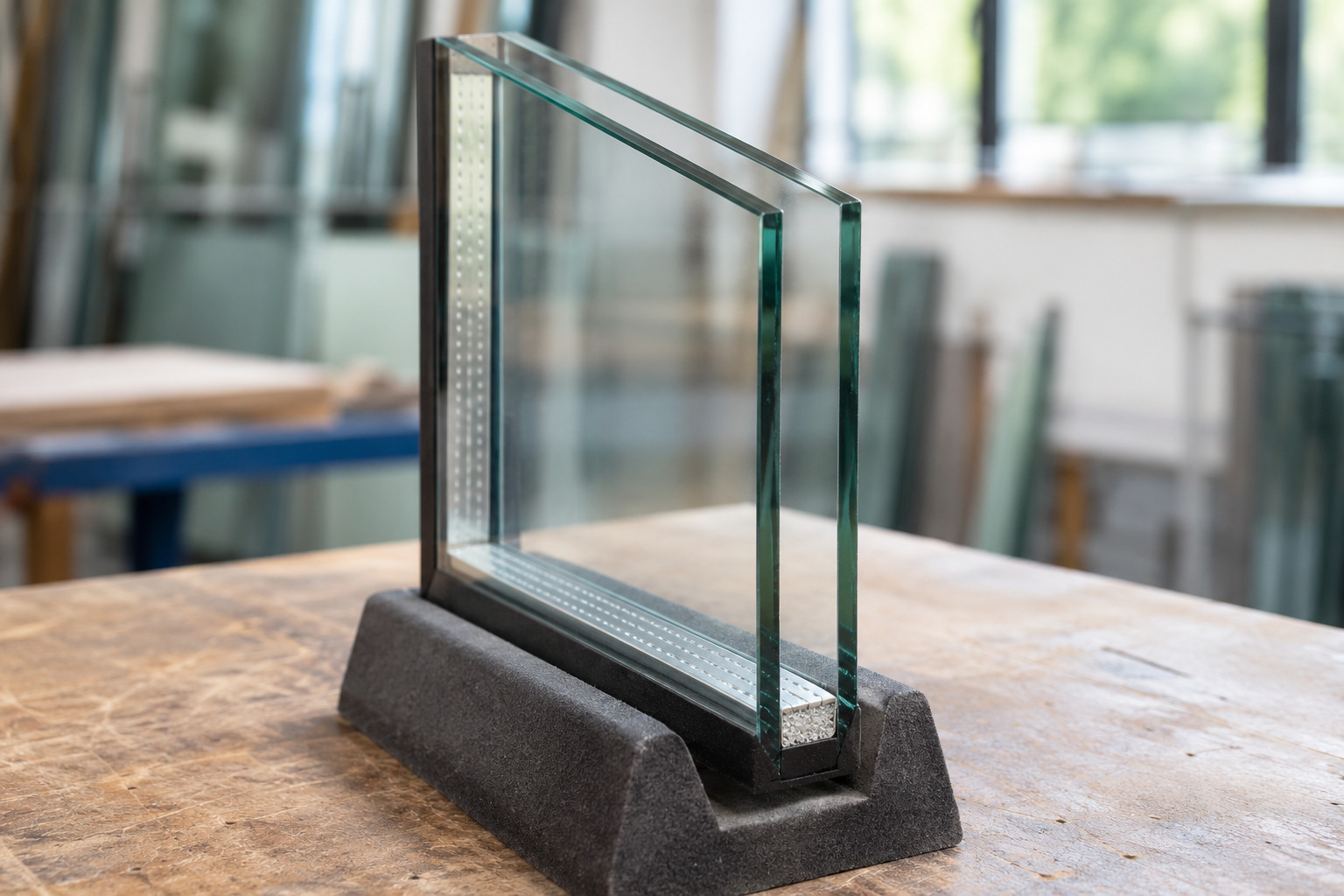
A double glazed unit is made in a factory and arrives at the window as one sealed piece. The Australian Government’s YourHome guide notes that manufacturers assemble these units in special dry rooms to keep moisture out of the gap. A unit is built from these parts:
The cross-section diagram with this section shows a double and a triple unit. It labels the glass, the argon gap, the Low-E coatings and the spacer with its drying agent. Its thicknesses are an illustration only.
Units with three panes and two gaps also exist, and their glass line simply runs longer. Our post on where triple glazing earns its keep in a Melbourne home covers when that third pane is worth having.
The numbers in a glass line read across the unit in millimetres: first pane, then gap, then second pane. So 4-12-4 means a 4 mm pane, a 12 mm gap and another 4 mm pane, which makes a unit 20 mm thick.
Words after the numbers name what fills the gap and what is on the glass, such as argon or Low-E. YourHome writes the same idea out in full, as “3mm clear glass/6mm air gap/3mm clear glass”.
| What the quote says | First pane | Gap | Second pane | Total thickness |
|---|---|---|---|---|
| 3-6-3 | 3 mm | 6 mm | 3 mm | 12 mm |
| 4-12-4 | 4 mm | 12 mm | 4 mm | 20 mm |
| 6-12-6 | 6 mm | 12 mm | 6 mm | 24 mm |
These rows are worked examples of the notation. They are not recommended make-ups, and they are not any supplier’s standard unit. Where the two panes differ, ask which one faces outside, because the numbers alone do not always make that clear.
For each window, the glass line should tell you:
Those numbers describe the glass alone. For the figures that compare how well complete windows hold heat, see our post on the one window number that predicts your heating bill.
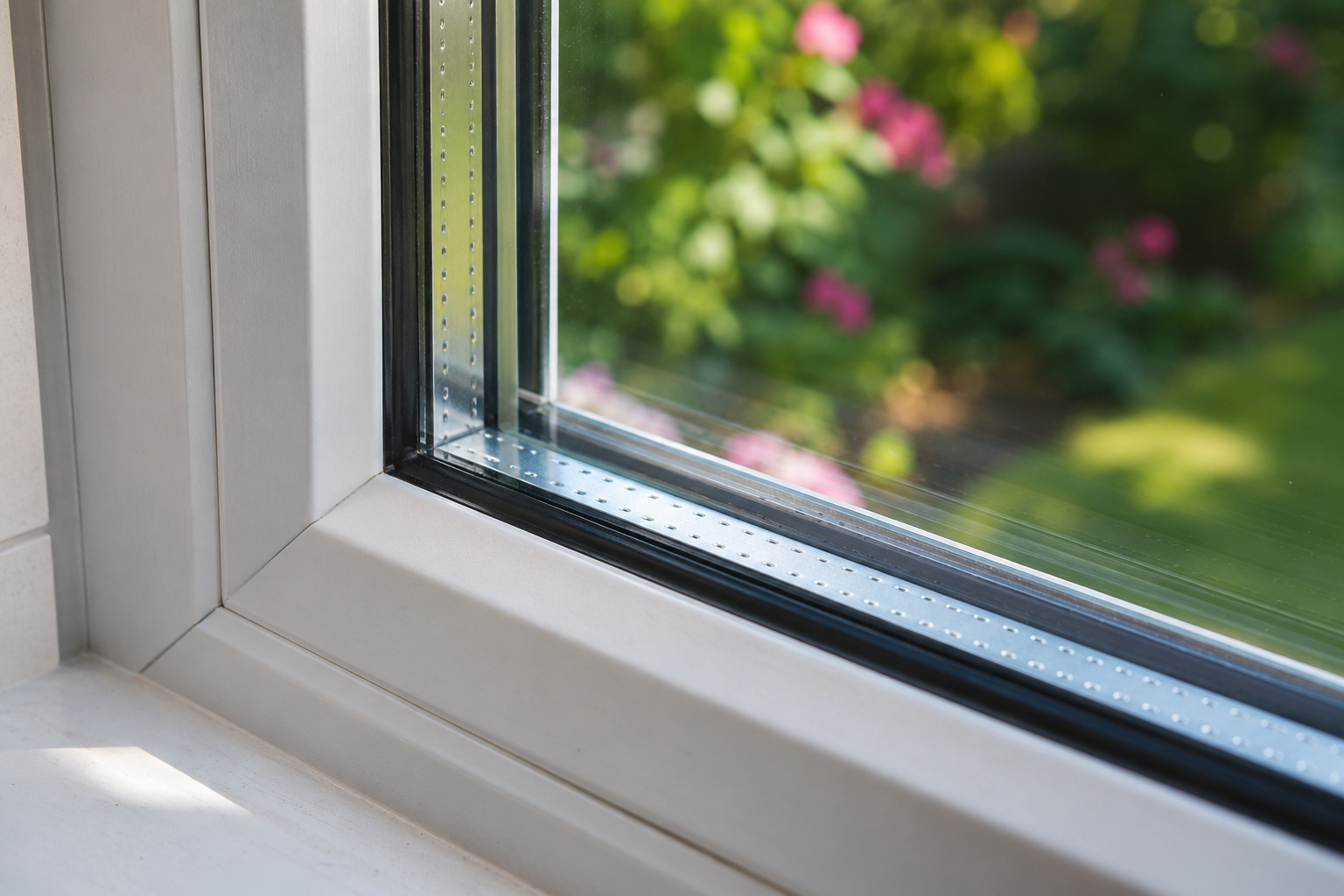
The gap in a double glazed unit is usually 6 to 18 mm wide, according to YourHome. Wider gaps insulate better, and 12 mm is normally accepted as the preferred gap.
There is a limit. YourHome also notes that very large gaps, the kind used to cut low-pitched noise, can let air circulate between the panes. Moving air carries heat across the gap, which reduces how well the unit insulates.
So a bigger middle number on a quote is not automatically a warmer window.
A thicker unit also has to fit the frame it sits in. The close-up photo with this section shows the metal spacer bar that sets the gap, at the corner of a sash. If two quotes differ only in gap width, ask each supplier why they chose that width and whether their frame is made to hold that unit.
Units built mainly to cut noise are a separate specification, usually with a thicker or laminated pane. For how those are chosen, read why acoustic glass isn’t enough for traffic noise.
The gap holds either dry air or argon. YourHome describes argon as a more inert, low-conductivity gas. In plain terms, argon carries heat across the gap less readily than air does, which is why it is used in place of air.
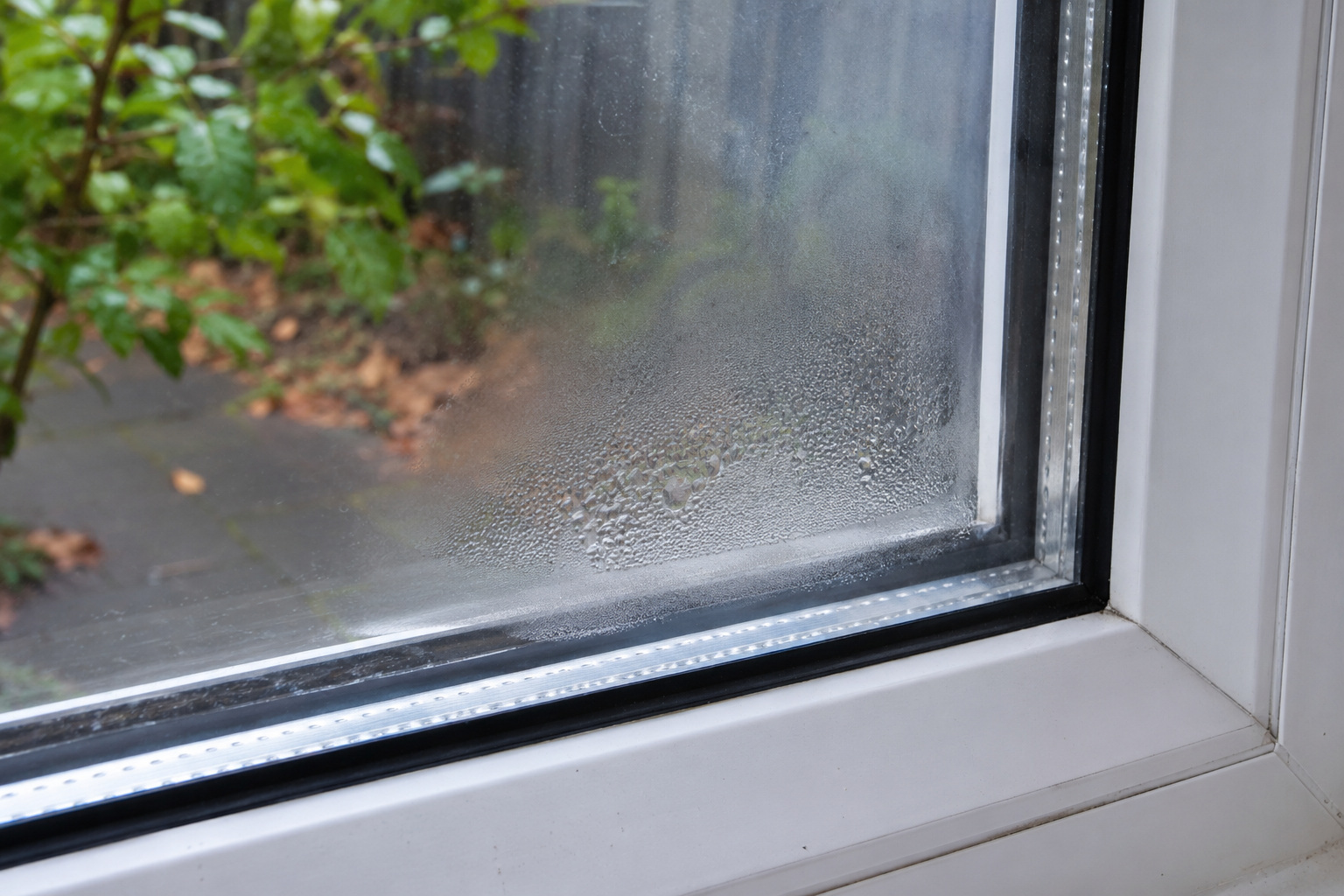
The gap also has to stay dry. After assembly, the desiccant inside the spacer soaks up any moisture left behind. YourHome warns that too little desiccant can let moisture condense on the glass inside the unit in cold weather. It also notes that filling the gap with argon instead of air reliably keeps moisture out.
Fog or droplets trapped between the two panes usually mean the edge seal has been breached or the desiccant is spent. How that differs from condensation on the room side of the glass is explained in what condensation on your double glazed windows is telling you.
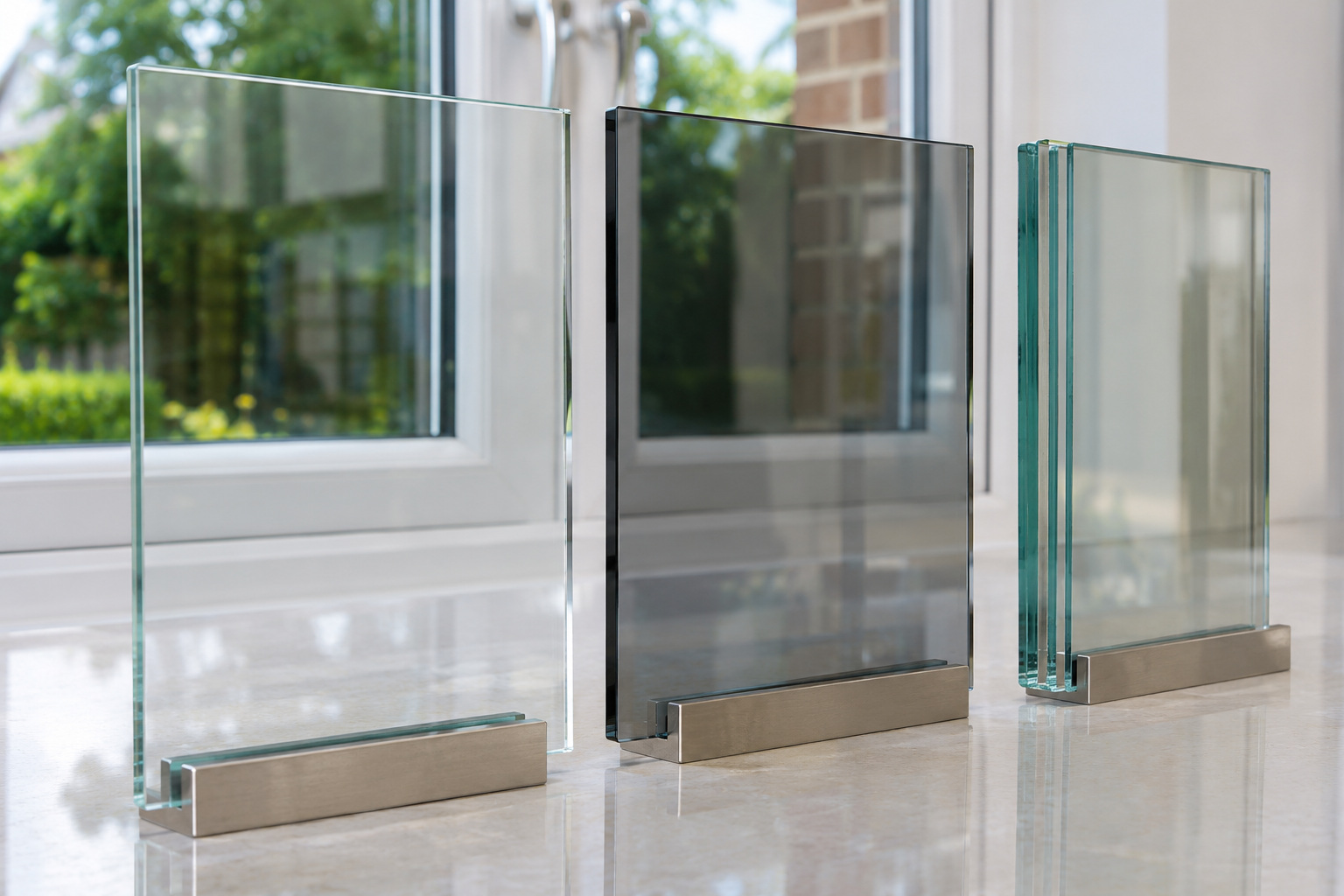
Each pane in a unit can be a different kind of glass, chosen for heat, light, safety or noise. These are the main types:
Low-E coatings come in two kinds. Pyrolytic coatings are durable and can be used on any glazing, including a single pane. Vacuum-deposited coatings are soft and are only used sealed inside a double or triple glazed unit. Either kind has to be used correctly, or it can deteriorate or fail to perform.
Which glass suits which side of the house is its own decision, covered in our guide to cutting heat through west-facing windows without dark rooms. Some panes in a house also have to be safety glass under the building rules, and laminated and toughened glass can both meet that requirement.
You can see how these glass options come together in a finished window on our uPVC double glazed windows page.
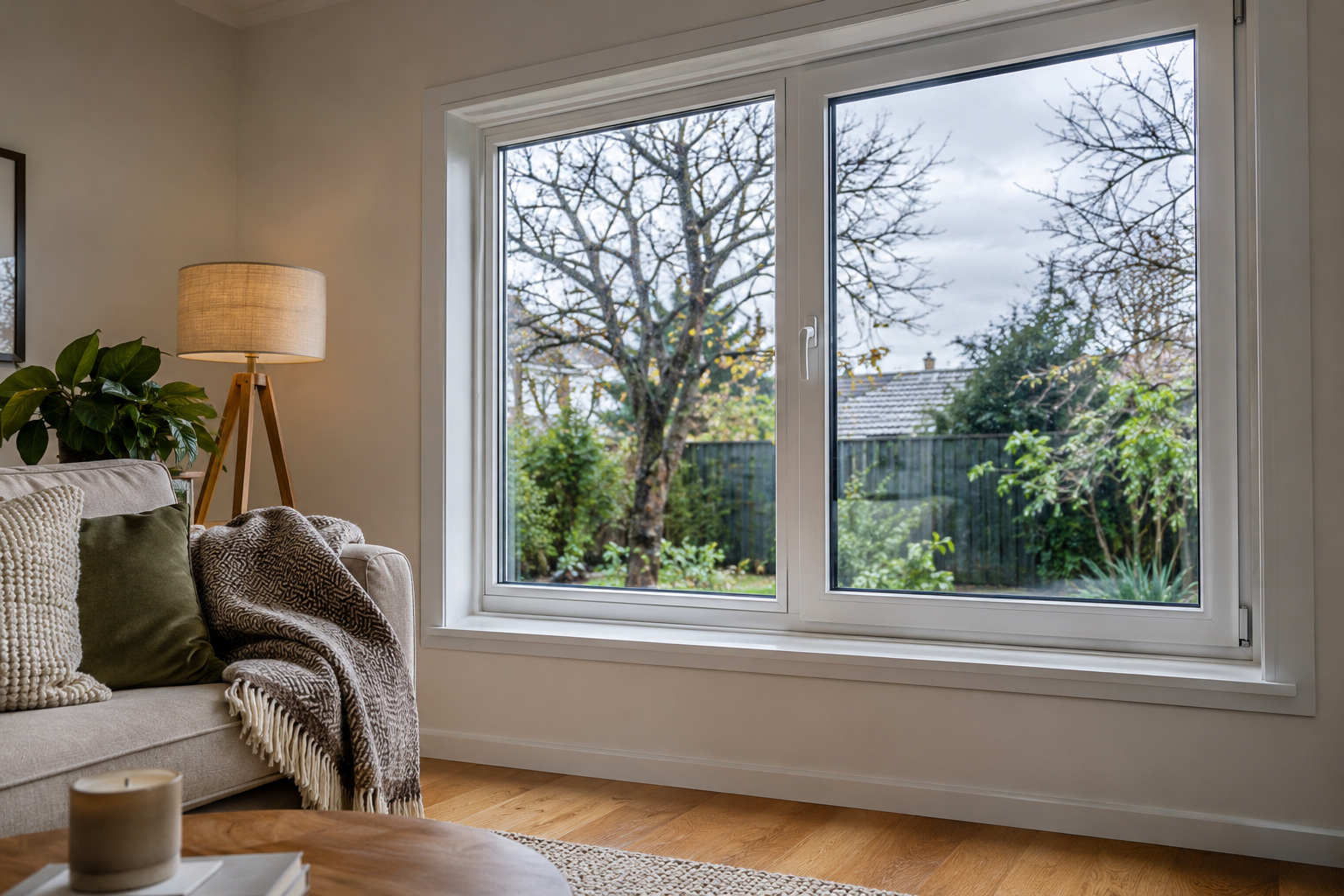
For a Melbourne home, yes, in the rooms you heat. YourHome names Melbourne as a cool climate, where heat loss is the main way windows add to a home’s yearly energy use. A sealed double glazed unit is better at holding that heat in than a single pane.
Low-E glass makes a single pane perform better than clear glass, although the window is still one layer of glass with nothing trapped between layers.
| What you are comparing | Single glazing | Double glazing |
|---|---|---|
| What it is | One pane | Two panes with a sealed gap |
| Heat loss on a cold night | Higher | Lower, because the sealed gap slows it |
| Winter sun through north glass | Lets it in | Also lets it in |
| Voices and higher-pitched noise | One pane does less | The sealed unit reduces it |
| Traffic rumble and aircraft | Thicker or laminated glass helps | Thicker or laminated glass and a wider gap help |
| Condensation on the room side | More likely | Less likely, as the inner pane stays closer to room temperature |
North-facing glass does not need to stay single glazed to catch winter sun. YourHome calls that a common misconception. Both kinds let in plenty of sun, and the double glazed window keeps more of that warmth in once the sun has gone.
Price depends mostly on the size of each window, the frame material and the glass. Our guide to what double glazed windows cost in Melbourne sets out how each one changes the figure.
If your frames are sound and you would rather keep them, our post on getting double glazing without replacing the whole window compares the other routes.
When you compare quotes, ask each supplier to write the glass make-up of every window in millimetres. Ask them to name the gas and any coating too, so you are comparing like with like. You can send your plans, window schedule or an existing quote to Weatherall Windows through our contact page, which takes file uploads.